
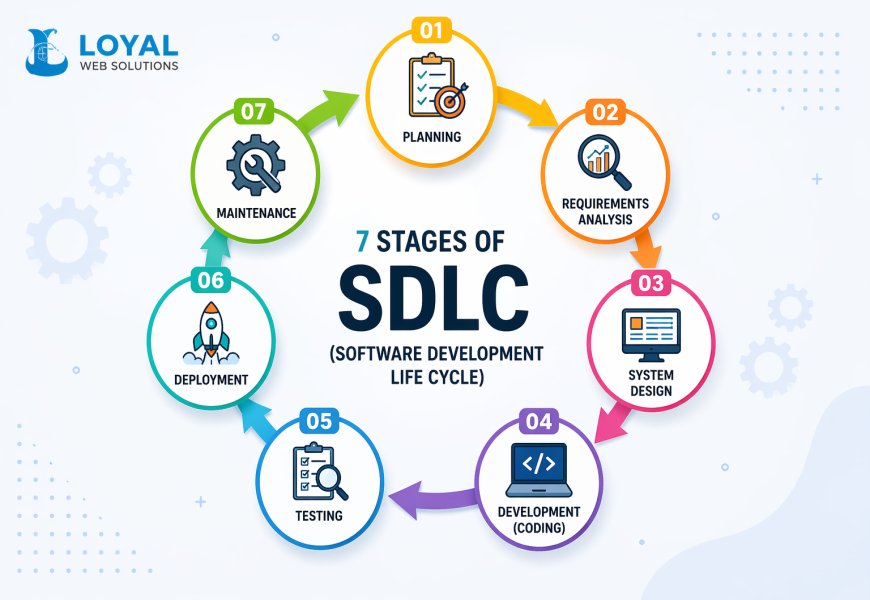
Businesses are currently using a structured process to develop scalable quality software in today’s fast-paced digital world. One of the most popular methods, of course, is the software development lifecycle (SDLC), which outlines steps to build quality software. The SDLC provides a structured process to design and develop user-friendly digital solutions for your company.
Loyal Web Solutions has extensive experience in implementing proven SDLC methodologies to provide its clients with effective, secure, and user-friendly digital solutions.
7 Stages of the Software Development Life Cycle
1. Planning
In the first stage of the SDLC, planning for the system development lifecycle (SDLC) occurs by establishing project goals, defining the scope of work, establishing a budget, and determining the timeline. During this phase, teams identify business requirements and potential risks and allocate resources accordingly.
Why is it important?
A well-planned project is much less likely to experience serious issues than a poorly planned project, and it should be conducted according to established business goals and objectives.
2. Requirement analysis
At this point, developers will work with the stakeholder(s) to develop a comprehensive set of requirements for the intended software application. This will include both functional requirements (i.e., the intended functions of the system) and non-functional requirements (i.e., performance, security, usability, etc.).
Key Activities:
1. Interviews with Stakeholders
2. Documenting Requirements
3. Feasibility Analysis
Project Outcome: A clearly defined blueprint of what needs to be built.
3. System Design
The system architecture and system design are developed as per the requirements that have been accepted. This includes User Interface/User Experience (UI/UX), the database structure, and the workflow of the application within the system.
There are two types of design:
1. High-Level Design (HLD)
2. Low-Level Design (LLD)
Why this is important: A well-designed system will be scalable, perform well, and be maintainable over its life cycle.
4. Coding / Development
This is where coding actually begins. Developers will write coding using programming languages and frameworks that conform to design specifications.
Best practices:
- Clean code and coding efficiently;
- Version controlling (i.e., version control systems) );
- Regular code reviews performed on a frequent basis.
At Loyal Web Solutions, we ensure all code follows the highest possible standards by making sure every line of code meets client expectations.
5. Testing
The last stage of the software’s development before it’s deployed is to test the software to ensure there are no bugs. Testing is an important part of ensuring that the software functions as it should.
Some examples of types of testing are the following:
- Unit Testing
- Integration Testing
- System Testing
- User Acceptance Testing (UAT)
The goal is to deliver a bug-free and high-performing product.
6. Deployment
Once the product has passed testing, it will be released to users either in phases or as a full release depending upon the specific project requirements.
There are three strategies that can be used to deploy the product:
- Blue/green deployment.
- Continuous deployment.
- Manual rollout.
The result of all these strategies is that end users will be able to use the product.
Stage 7: Maintenance
Continuous support, upgrades, and alterations are made during this stage after launching software products. Continuous maintenance and improvements are necessary after launching the product to optimize performance and monitor for bugs in the software.
Some of the maintenance tasks include:
- Fixing bugs
- Improving performance
- Making security updates
- Upgrading features
The development team at Loyal Web Solutions will continually support you to maintain the competitive edge of your software.
Why SDLC Is Important for Your Business
A structured Software Development Life Cycle (SDLC) has several advantages to implement, such as the following:
- Improvement of the Project Management Process.
- Increase in Quality of Software Developed.
- Decrease in Development Cost.
- Faster Time to Market with Software.
- Improved Satisfaction of Customers with Software.
Business that follows an organized lifecycle will reduce risks and enhance efficiencies throughout the development process.
Why Choose Loyal Web Solutions?
Finding the right partner for software development is an important decision. Our client-first and technical approach to delivering great solutions makes Loyal Web Solutions an ideal choice for you.
What makes us different:
- Development experience
- Custom solutions to fit all businesses
- Agile/scalable process
- Continually provide maintenance and support
Loyal Web Solutions will make sure everything goes smoothly from beginning to end of the software development life cycle, no matter what type of software you need, including web applications, mobile applications, or enterprise software.
Conclusion
To create software projects successfully, it is essential to understand the 7 stages of the software development life cycle. Each phase of the life cycle is critical in producing quality and dependable solutions, from planning through to the post-production phase, which occurs on an ongoing basis after launch.
Partnering with Loyal Web Solutions allows you to access a well-defined and efficient SDLC process that will help you turn your concepts or ideas into outstanding digital products.





Author Bio
By Hardip Koradia
Hardip Koradia, with over 15 years in the IT sector, masterfully blends Web Design, Development, SEO, and Digital Marketing, propelling Loyal Web Solutions since 2011 as its visionary CEO. Under his guidance, the firm has witnessed consistent growth and cultivated a team of mindful professionals. Off-duty, Hardip delves into internet research, sharing invaluable insights about the digital world, from web intricacies to mobile app trends.