
When building a site or starting an online shop, choosing the platform that is right for you can be incredibly important. WordPress, and Shopify are two of the more popular platforms. The two platforms are both powerful, but each is designed to cater for different users or business needs.
The answer to the question of which platform is best, Shopify or WordPress, depends on the goals you have, your budget, your technical skills and how much control you need over your site. You can choose the platform best suited to your needs by understanding the differences.
What Is WordPress?
WordPress is an open-source content management system (CMS) that allows you to build business websites, blogs and portfolios. It can also be used for membership platforms, online shops, or even membership sites.
WordPress sites often use WooCommerce plugins to provide eCommerce capabilities. The combination of these two plugins allows business owners to create highly-customised online shops, while still maintaining complete control over the website’s appearance, functionality and content.
WordPress offers a lot of flexibility. There are thousands of plugins and themes available to businesses, which allows them to customise and add new features to their website.
What is Shopify?
Shopify, a platform for eCommerce that makes it easy to create and manage an online store.
Shopify is a platform that offers hosting, tools for managing stores, products, and payment methods, as well as a variety of eCommerce features. Shopify is particularly appealing to companies that don’t want to deal with technical setup or hosting.
WordPress vs Shopify: Ease of Use
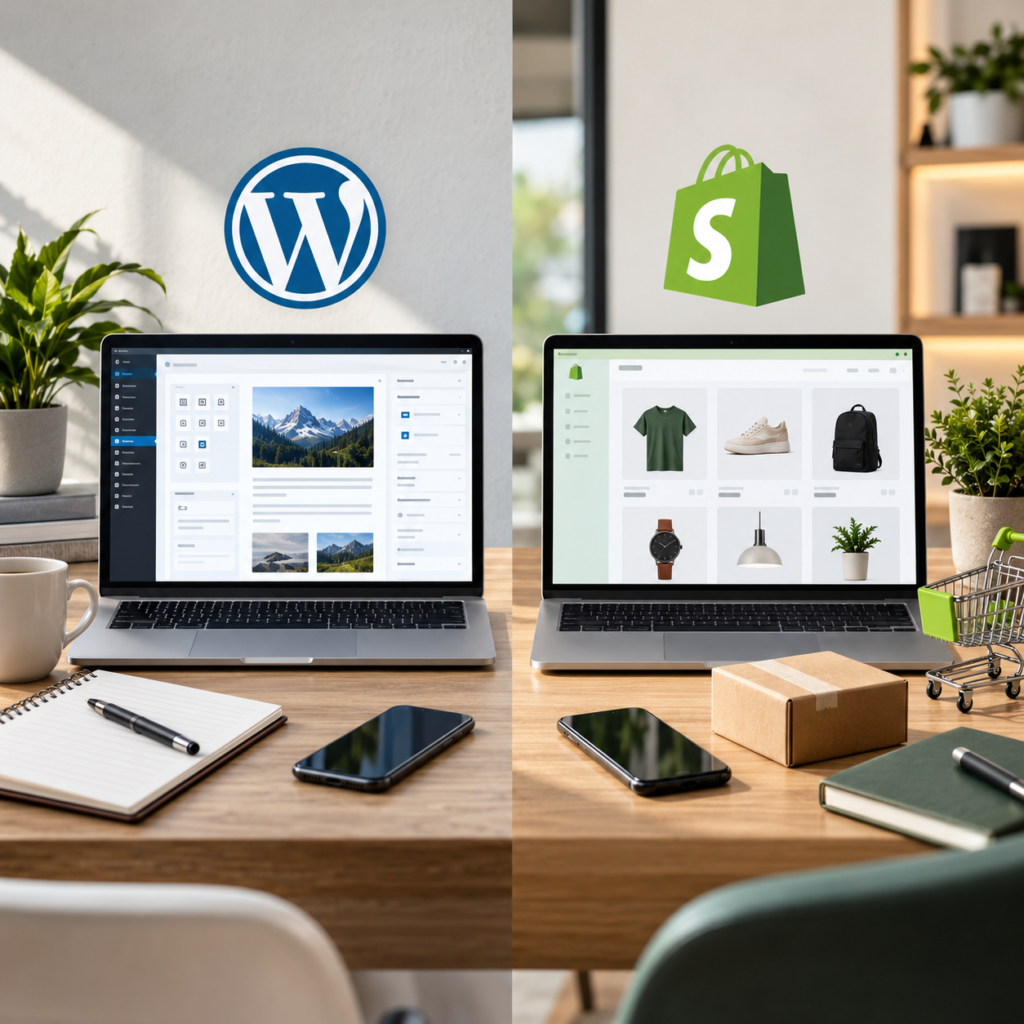
When comparing WordPress and Shopify, the ease of use will be a key factor.
In general, Shopify offers a guided installation process. The central dashboard allows users to choose a design, add products and configure payment options. They can then start creating their online shop. The platform manages hosting and many other technical tasks.
WordPress is more flexible, but it may also require more configuration at first. Install WordPress, select themes and plug-ins and arrange your hosting.
WordPress is a powerful content management tool that allows for a wide range of website customizations.
Design and Customisation
WordPress excels at customisation. Businesses have the option to choose among thousands of themes, or design a website from scratch.
You can use plugins to create contact forms, membership features, SEO tools, and more advanced eCommerce functions.
Shopify offers attractive themes as well as customisation features. WordPress may offer greater flexibility for businesses that require highly-specialised functionality.
You can choose between a simple website or one that allows you to control everything.
eCommerce Features
Shopify is a shopping platform that was specifically designed for online commerce. This means it has many of the essential features available right from the start.
Shopify’s dashboard allows businesses to manage their products, order, payment and shipping. Apps can add additional functionality.
When combined with WooCommerce, WordPress provides similar functionality. Flexibility is the main benefit. The main advantage is flexibility. Businesses can customize product pages, checkout procedures, shipping methods, and other features of their store according to requirements.
WordPress and WooCommerce offer extensive customization options for businesses that have complex eCommerce needs.
WordPress vs Shopify for SEO
Businesses that want to increase organic traffic should focus on search engine optimization.
WordPress’ SEO flexibility is well-known. With the help of dedicated SEO plugins or custom development, website owners can optimize URLs, page title, meta description, content, images, and other technical SEO elements.
Shopify offers useful SEO features and even allows you to optimize important elements of your pages. Shopify controls some website elements.
When supported by good content, a well-performing website and an SEO strategy that is strong, both platforms will perform very well on search engines.
Cost and Maintenance
The cost is also a major consideration.
Shopify is a subscription-based service. Additional themes and apps can create additional ongoing costs. Hosting, security, and platform upkeep are all managed by the service.
WordPress is an open-source software, however, businesses will need to pay hosting fees, domain registration, and possibly premium plugins, themes or professional development.
WordPress also requires regular maintenance and updates. Businesses have greater control of their website and hosting environment.
Scalability and Business Growth
Shopify and WordPress can both support businesses in growth.
Shopify allows you to easily expand your online store by adding new products, apps, and eCommerce features.
WordPress is scalable, allowing businesses to modify their site as needs change. The simple website of a company can evolve into an advanced WooCommerce shop, membership site or larger content platform.
A professional WordPress developer can help your business create features not available in standard plugins or themes.
Which Is Better: WordPress or Shopify?
There is no single platform that is right for every business.
Shopify may be suitable for businesses primarily focused on eCommerce that prefer a managed platform with straightforward store management.
WordPress may be suitable for businesses that need greater design flexibility, content management capabilities, SEO control and customised functionality.
Before choosing, consider your website goals, required features, long-term growth plans and available technical resources.
Conclusion
What you want from your site will ultimately determine whether you choose WordPress or Shopify.
Shopify is an eCommerce platform that makes it easy to manage many of the technical aspects. WordPress offers greater control and flexibility, especially for companies that require customised websites or strong content.
Consider your budget, future plans, and business needs before choosing a platform. The right platform for your business can be chosen from a variety of options.
Beginning can help you manage your site, enhance the user experience and promote sustainable growth online.
What you want from your site will ultimately determine whether you choose WordPress or Shopify.
Shopify is an eCommerce platform that makes it easy to manage many of the technical aspects. WordPress offers greater control and flexibility, especially for companies that require customised websites or strong content.
Consider your budget, future plans, and business needs before choosing a platform. The right platform for your business can be chosen from a variety of options.
Beginning can help you manage your site, enhance the user experience and promote sustainable growth online.



Author Bio
By Vishal Patel
Vishal Patel is the Chief Technology Officer at Loyal Web Solutions, where he has been a key leader since 2011. With a deep understanding of web technologies and a passion for innovation, Vishal has guided the company to consistently deliver top-tier digital solutions. His expertise in the industry ensures that every project is executed with precision and excellence.