
Artificial Intelligence has revolutionized the way that people find information on the internet. Users are increasingly relying on AI-powered search tools such as ChatGPT and Google AI Overviews to find direct answers, rather than scrolling pages of results.
This shift has introduced two important digital marketing strategies:
- AEO (Answer Engine Optimization)
- GEO (Generative Engine Optimization)
They both aim to increase your brand’s visibility within AI-generated answers, but focus on different aspects regarding how AI systems find, understand and cite data. Businesses that are able to optimize their websites for traditional search engines as well as AI-generated answers will gain a competitive edge.
What is AEO (Answer Engine Optimization)?
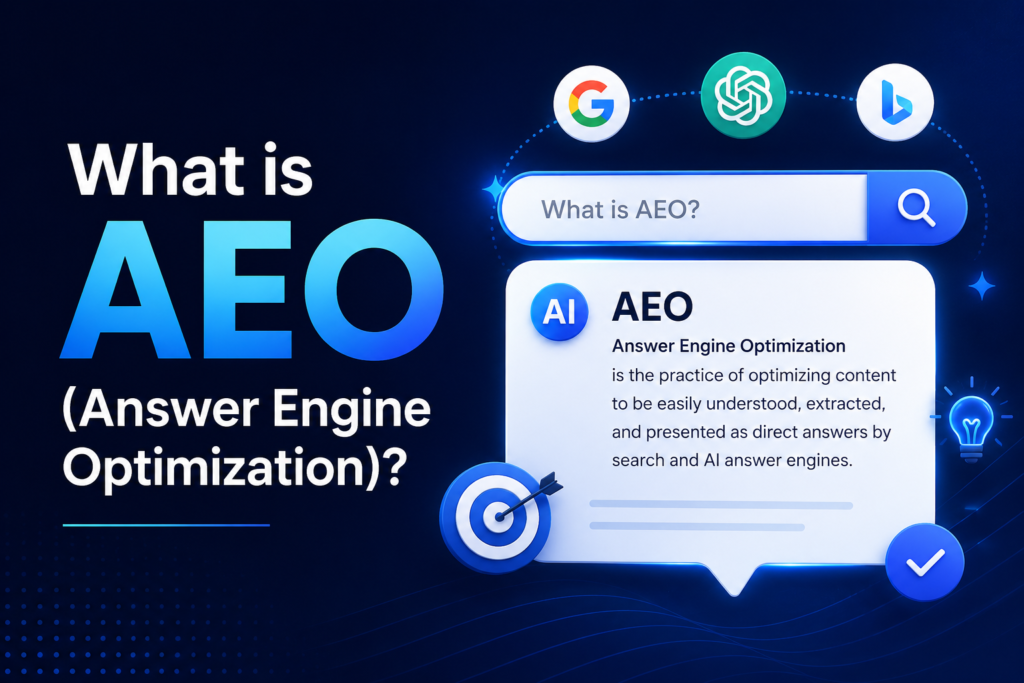
AEO (Answer Engine Optimization) refers to the creation and structure of content in a way that can be easily extracted and displayed by search engines or AI-powered systems.
Rather than simply ranking on page one of Google, AEO aims to become the answer users see in:
- Google AI Overviews
- Featured Snippets
- People Also Ask (PAA)
- Voice Search
- Smart assistants
- AI-powered search interfaces
Example
If someone searches:
“What is cloud computing?”
Google, or an AI assistant could display a brief definition instead of ten links. Your website will be selected if it provides the most clear and trustworthy explanation.
What is GEO (Generative Engine Optimization)?
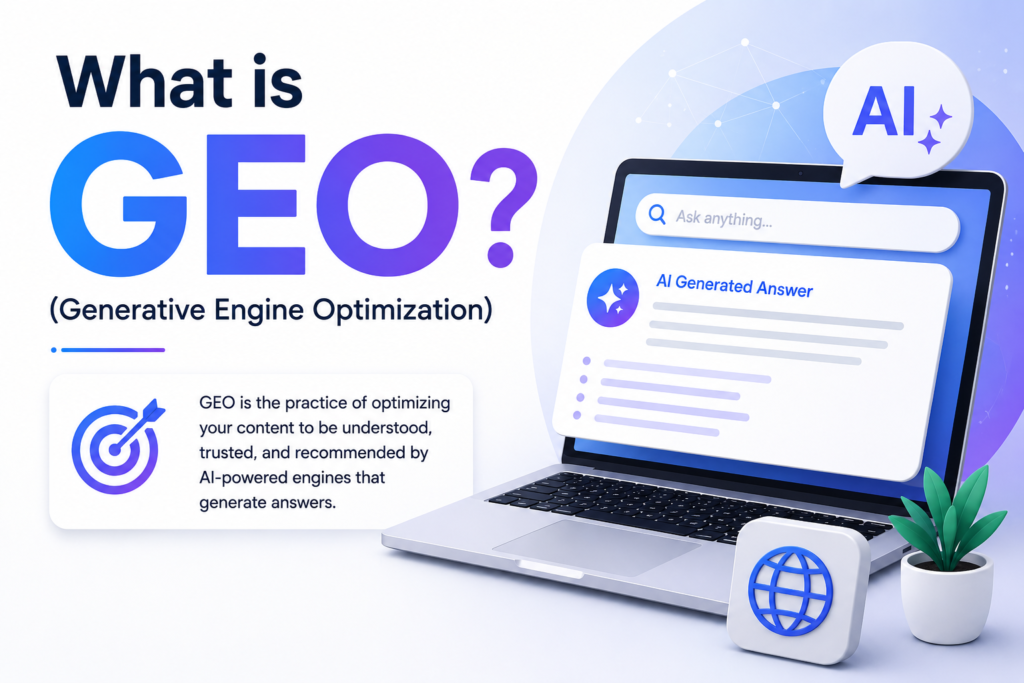
Generative Engine Optimization (GEO) focuses on increasing the likelihood that AI models reference, summarize, or cite your content when generating responses.
Unlike traditional search rankings, generative AI combines information from multiple trusted sources before producing an answer.
Examples include:
- ChatGPT
- Google AI Mode & AI Overviews
- Perplexity AI
- Claude
- Microsoft Copilot
- Gemini
It is important to not just rank, but also become a source trusted by AI systems when they answer user questions. GEO was introduced in early academic research as a way to optimize content for AI generated responses. It showed measurable improvement under controlled tests.
AEO vs GEO: What’s the Difference?
| Feature | AEO | GEO |
| Primary Goal | Become the direct answer | Become a cited AI source |
| Focus | Question-answer optimization | AI citation and entity visibility |
| Target Platforms | Google AI Overviews, Featured Snippets, Voice Search | ChatGPT, Gemini, Claude, Perplexity, AI search |
| Content Style | Concise answers | Comprehensive, authoritative content |
| Success Metric | Featured answers | AI mentions and citations |
Note: The industry terminology continues to evolve. AEO and GEO are used interchangeably by some experts, but others differentiate AEO from GEO. AEO is optimizing answer surfaces while GEO optimizes for citations within generative AI.
How AEO and GEO Differ from Traditional SEO
| SEO | AEO | GEO |
| Focuses on rankings | Focuses on answers | Focuses on AI citations |
| Optimizes keywords | Optimizes questions | Optimizes entities and trust |
| Measures clicks | Measures answer visibility | Measures AI mentions |
| Blue links | Direct answers | AI-generated responses |
SEO remains the foundation. Strong technical SEO, crawlability, and high-quality content support both AEO and GEO success.
Why AEO and GEO Matter
AI-powered search is changing user behavior:
- Users expect instant answers.
- Zero-click searches continue to grow.
- AI assistants summarize information instead of listing links.
- Brand visibility increasingly depends on being cited by trusted AI systems.
Businesses that ignore AI optimization may still rank well in search results but receive less exposure in AI-generated answers.
Benefits of AEO and GEO
- Increased AI visibility
- Higher brand authority
- Better trust signals
- Improved user experience
- More qualified traffic
- Greater likelihood of being cited
- Long-term competitive advantage
How to Optimize for AEO
1. Answer Questions Clearly
Begin important sections with a direct answer before adding detail.
2. Use Question-Based Headings
Examples:
- What is AEO?
- How does GEO work?
- Why is AI search important?
3. Add FAQ Sections
FAQs help search engines understand question-and-answer relationships.
4. Implement Structured Data
Use schema markup such as:
- FAQ Schema
- Article Schema
- Organization Schema
- HowTo Schema
- Breadcrumb Schema
5. Improve Readability
Use:
- Bullet points
- Tables
- Numbered steps
- Short paragraphs
- Clear definitions
How to Optimize for GEO
Publish Original Research
Unique statistics and insights are more likely to be referenced than generic content.
Build Strong Entity Signals
Ensure consistent information across:
- Website
- Google Business Profile
- Social media
- Industry directories
Demonstrate EEAT
Include:
- Author biographies
- Credentials
- First-hand experience
- Citations to reliable sources
- Transparent editorial policies
Cover Topics in Depth
Create comprehensive resources that answer related questions and demonstrate expertise.
Keep Content Fresh
Regular updates improve relevance and trustworthiness.
Best Practices for AI Search Optimization
- Write naturally for humans.
- Cover the complete user journey.
- Use descriptive headings.
- Support claims with credible evidence.
- Add internal links to related content.
- Optimize page speed and mobile usability.
- Include visuals with descriptive alt text.
- Maintain consistent business information across the web.
Common Mistakes to Avoid
- Keyword stuffing
- Thin or duplicate content
- Publishing AI-generated content without review
- Ignoring structured data
- Missing author information
- Outdated statistics
- Weak internal linking
- Poor website performance
Essential Tools
- Google Search Console
- Google Analytics 4
- Bing Webmaster Tools
- PageSpeed Insights
- Rich Results Test
- Schema Markup Validator
- AI visibility monitoring tools
The Future of AEO and GEO
AI search is likely to become a standard part of how people discover information. Future optimization will increasingly emphasize:
- Entity authority
- Trustworthy content
- Structured information
- Multimedia
- Freshness
- Verifiable expertise
Businesses that invest in these areas today will be better positioned as AI-assisted discovery continues to expand.
Final Thoughts
AEO and GEO are the new stage in digital visibility for a world dominated by AI. Modern content, while still essential for SEO, should be designed with the goal of answering questions, demonstrating expertise and providing trustworthy information which AI systems will confidently refer to.
It is best to integrate all three strategies. You can increase your ranking in search engine results, appear in the answer box, or be cited by AI assistants by creating user-focused, accurate content that is well-structured and backed up by strong technical signals and credibility.
Frequently Asked Questions
No. SEO focuses on improving visibility in search engine results pages, while AEO focuses on making your content easy for answer engines to extract and present directly.
No. GEO complements SEO rather than replacing it. Strong SEO provides the technical and content foundation that supports AI visibility.
Yes. Any business can improve its chances of appearing in AI-generated answers by publishing high-quality, authoritative, and well-structured content.
Generative AI platforms such as ChatGPT, Gemini, Claude, Perplexity, and Microsoft’s AI experiences can all benefit from content optimized for AI citation and understanding.
No single factor determines ranking. AI generated responses are more visible when they contain clear answers, topics with authority, well-structured content, high technical standards, signals of trust, and expertise.




Author Bio
By Hardip Koradia
Hardip Koradia, with over 15 years in the IT sector, masterfully blends Web Design, Development, SEO, and Digital Marketing, propelling Loyal Web Solutions since 2011 as its visionary CEO. Under his guidance, the firm has witnessed consistent growth and cultivated a team of mindful professionals. Off-duty, Hardip delves into internet research, sharing invaluable insights about the digital world, from web intricacies to mobile app trends.